
A homeowner notices a leaking pipe. Or their AC stops working on a hot afternoon. Within minutes, they’re on Google, scanning options, reading reviews, and deciding who to call.
What happens between that first inquiry and the final booking is where most home services businesses either win or lose.
The modern customer journey isn’t linear anymore. It’s fast, fragmented, and driven by intent. If your marketing and systems don’t align with how people actually make decisions today, you’ll keep generating leads that never turn into jobs.
Let’s break down what the customer journey really looks like in 2026 and how to build a system that turns inquiries into consistent bookings.
The Modern Customer Journey Is No Longer Linear
Traditionally, businesses viewed the journey as simple: awareness → interest → decision → booking.
But today, customers jump between stages. They might:
- Search on Google
- Check reviews
- Visit your website
- Leave and compare competitors
- Come back later to book
This non-linear behavior means your business must show up consistently across multiple touchpoints. The journey is no longer a straight funnel; it’s a loop of trust-building moments.
And if you’re missing even one of those moments, you risk losing the customer entirely.
Stage 1: The Moment of Need (High Intent Starts Here)
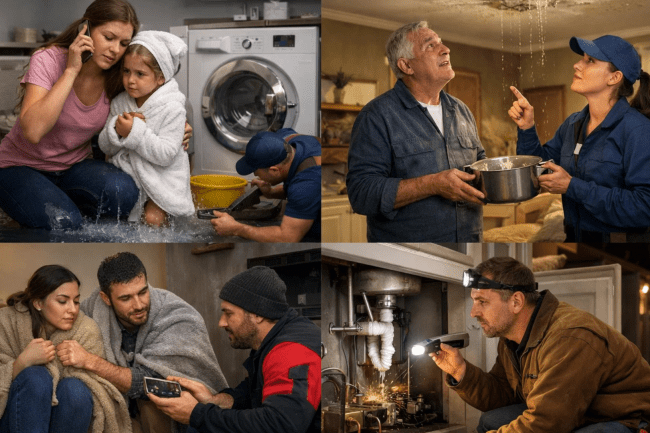
In-home services, the journey often begins with urgency.
Unlike other industries, customers don’t casually browse. They search when they need a solution fast. This is why channels like Google Search dominate early-stage interactions.
What matters most here is visibility and relevance. If your business doesn’t appear when someone searches “plumber near me” or “AC repair today,” you’re not even in the race.
But visibility alone isn’t enough. Customers quickly judge based on:
- Reviews and ratings
- Service availability
- Proximity
- Clear messaging
This is the moment where first impressions decide whether they click or move on.
Stage 2: Evaluation Happens Faster Than You Think
Once a user clicks, the evaluation phase begins, and it’s incredibly short.
Customers don’t spend hours analyzing. They scan. Within seconds, they decide:
- Do I trust this company?
- Can they solve my problem?
- How quickly can they help?
This stage is where most businesses lose potential customers.
Why? Because their website doesn’t answer these questions immediately.
High-performing businesses understand that evaluation is not about information overload; it’s about clarity. The faster users understand your value, the more likely they are to move forward.
Stage 3: Inquiry Is Easy – Commitment Is Not
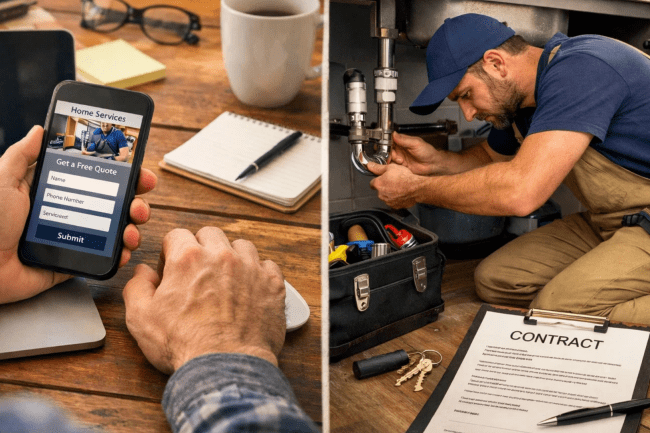
Getting an inquiry is relatively easy today. Forms, calls, and chat options make it simple for users to reach out.
In fact, home service businesses convert only a small percentage of leads into actual jobs, with recent benchmarks showing an average conversion rate of around 7–8%, highlighting how many inquiries never turn into revenue
But here’s the gap most businesses don’t see:
An inquiry is not a booking.
In fact, home service businesses convert only about 7–8% of leads into paying customers on average, which means the majority of inquiries never turn into revenue.
Why does this happen?
Because the journey doesn’t end at the inquiry, it intensifies.
At this stage, customers are still comparing. They may contact multiple providers and choose the one that responds first, communicates clearly, and builds confidence.
Stage 4: Speed Is the Biggest Conversion Factor
One of the most critical (and overlooked) factors in the journey is speed.
Studies show that responding within the first minute can increase conversion rates by over 300%, making speed one of the most critical factors in winning a booking
The difference between winning and losing a booking often comes down to how quickly you respond.
Research shows that responding within the first minute can increase conversions dramatically in some cases by over 300%.
This changes how you should think about lead management.
It’s not just about generating inquiries. It’s about having systems in place to:
- Respond instantly
- Route leads correctly
- Follow up without delay
If your process is slow or manual, you’re handing business to competitors who are faster.
Stage 5: Trust Is Built in Micro-Moments
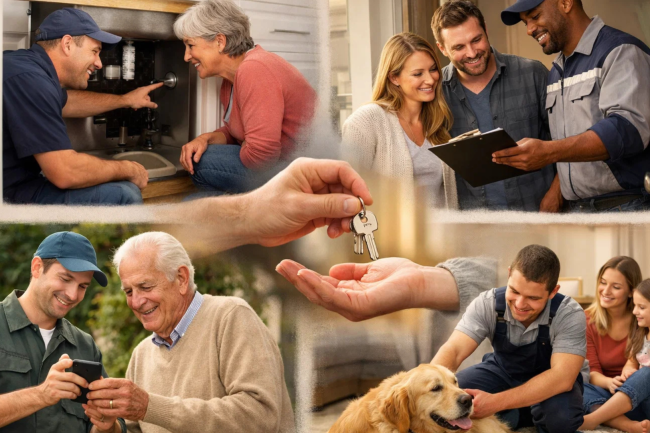
From inquiry to booking, customers are constantly evaluating trust.
Every interaction matters:
- How quickly you respond
- The tone of your communication
- The clarity of your pricing
- The professionalism of your process
These small moments shape perception.
If something feels off, delayed responses, unclear answers, or inconsistent communication, customers hesitate. And hesitation leads to drop-offs.
This is why the journey isn’t just about marketing. It’s about experience.
Stage 6: Follow-Up Is Where Most Revenue Is Lost
Here’s one of the biggest blind spots in home services:
Most leads don’t convert immediately.
They need time, reminders, and reassurance. But many businesses fail to follow up effectively, resulting in lost opportunities.
In fact, a large percentage of leads never convert simply because there’s no structured follow-up system in place.
This is where nurturing becomes critical.
Simple systems like automated follow-ups, reminders, and re-engagement messages can significantly improve conversion rates. Without them, even high-quality leads slip through the cracks.
Stage 7: The Booking Experience Must Feel Effortless
When a customer finally decides to move forward, the process should feel easy.
But many businesses create friction here:
- Complicated booking steps
- Limited availability visibility
- Confusing communication
At this stage, even small obstacles can cause drop-offs.
The goal is to make booking feel natural and seamless. The less effort required, the higher the conversion.
Why Most Home Service Businesses Struggle With This Journey
The biggest issue isn’t lead generation. It’s the lack of a connected system.
Most businesses treat each stage separately:
- Ads generate leads
- Websites capture inquiries
- Sales teams handle calls
But there’s no unified flow connecting everything.
This leads to:
- Missed opportunities
- Slow response times
- Poor follow-up
- Inconsistent customer experience
And ultimately, low conversion rates.
What High-Performing Businesses Do Differently
The businesses that consistently turn inquiries into bookings don’t rely on luck. They build systems.
They understand that the journey must feel seamless from start to finish.
Instead of focusing only on traffic or leads, they focus on:
- Speed and responsiveness
- Clear messaging at every stage
- Consistent follow-up
- Data-driven optimization
They treat the customer journey as a connected system, not isolated steps.
This is where working with a team like Flying Goat Agency creates a real advantage. The focus isn’t just on bringing in inquiries, it’s on building the entire journey so that those inquiries convert into predictable revenue.
The Role of Data in Optimizing the Journey

Without data, you’re guessing.
You don’t know:
- Where users drop off
- Which leads convert
- What messaging works best
- How long it takes to close
Tracking these insights transforms how you operate.
For example, understanding funnel behavior helps identify bottlenecks. Conversion data reveals where improvements are needed. And performance metrics guide smarter decisions over time.
Modern marketing isn’t about doing more; it’s about doing what works, repeatedly.
Final Thoughts: Turning Inquiries Into Predictable Bookings
The customer journey in home services has changed.
It’s faster, more competitive, and more experience-driven than ever before.
Customers don’t just choose the best service they choose the business that responds quickly, communicates clearly, and makes the process easy.
When you align your marketing, systems, and follow-up with this reality, everything changes.
You stop chasing leads.
And start converting them consistently.
That’s the difference between businesses that struggle with unpredictable revenue and those that build a system that scales.