
You launch a private health insurance campaign. The creative is sharp. The headline pops. The CTR looks fantastic.
And then… nothing.
Leads are thin. Calls don’t happen. Cost per acquisition is ugly. Your team starts asking the classic question: “But the CTR is high, so why isn’t this working?”
Because CTR only tells you one thing: people clicked. It does not tell you that the right people clicked, for the right reason, and landed on a page built to convert.
Google defines CTR as the number of clicks divided by the number of impressions. It’s a measure of interaction, not outcomes.
Let’s break down why this is especially common in private health insurance ads, and how to fix it without chasing vanity metrics.
CTR vs Conversions: The Metric Mix-Up That Burns Budgets

CTR answers: “Did my ad attract attention?”
Conversions answer: “Did my offer and experience earn trust and action?”
Industry benchmark data shows that while some industries achieve high CTRs, conversion rates vary significantly depending on landing page quality and alignment with intent.
A high CTR can even mask problems, as platforms may reward “engaging” ads with cheaper clicks and better delivery. You get more traffic, faster, while the real bottleneck stays untouched.
If you’re running private health insurance campaigns, that bottleneck is usually one (or more) of these:
- Intent mismatch
- Message-to-landing-page disconnect
- Trust and compliance friction
- Tracking and optimization issues
- Lead quality problems disguised as volume
Databox summarizes a common pattern: a high CTR and a low conversion rate often point to poor targeting or a weak post-click experience.
The “Curiosity Click” Problem in Health Insurance
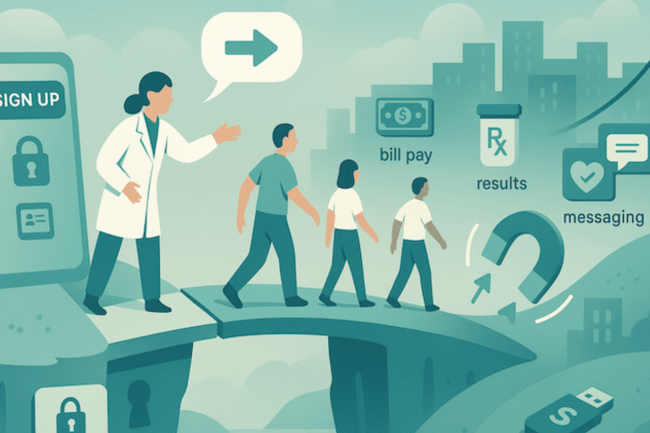
Private health insurance is personal, confusing, and high-stakes. That combination creates a lot of curiosity clicks.
Examples of ad angles that often spike CTR but don’t translate to conversions:
- “See if you qualify.”
- “New 2026 plans”
- “Rates drop this month”
- “Instant quote”
These can be great hooks, but they also pull in people who are:
- just browsing,
- comparing casually,
- not ready to share details,
- not eligible for what you actually sell,
- price-shopping with no intent to talk.
High CTR here is not a win; it’s a signal that your ad is acting like entertainment, not qualification.
Interactive check: Which bucket describes most of your clicks right now?
- “I need coverage this week.”
- “I’m comparing options soon.”
- “Just curious about pricing.”
- “I clicked by accident while scrolling.”
If you’re getting mostly 3s and 4s, the campaign will look “busy” but still not produce.
When Targeting Optimizes for Clickers, Not Buyers
On Meta, especially, it’s easy to build campaigns that train the algorithm to find people who click a lot.
If your objective, event setup, or early data is off, the platform will keep feeding you cheap clickers instead of qualified converters. A common root cause is misconfigured conversion tracking or using the wrong objective for the outcome you want.
On Google, you can end up with a similar problem if keywords and match types skew toward informational results. You’ll get clicks from research queries that look relevant but carry weak intent.
Rule of thumb: If your CTR is rising while lead quality drops, you’re probably optimizing for the wrong behavior.
The Ad Promise vs Landing Page Reality Gap

This is the #1 reason we see high CTR and low conversions.
Your ad says: “Check plans in 60 seconds.”
Your page feels like: “Welcome to our website. Here’s our story.”
Or your ad highlights affordability, but the page emphasizes premium coverage. Or your ad offers “instant quote,” but the form asks 14 questions before anything happens.
Multiple sources call out message mismatch as a primary driver of high CTR with low conversions.
In private health insurance, that mismatch kills conversions faster because the visitor is already hesitant. They clicked with a specific hope. If the page doesn’t deliver it immediately, they bounce.
Interactive micro-audit: Open your landing page and answer “yes/no”:
- Does the page repeat the exact promise from the ad in the first screen?
- Is the next step obvious within 5 seconds?
- Can someone understand what happens after they submit in one sentence?
- Is the form asking only for what you truly need to start a conversation?
If you’re answering “no” more than twice, CTR won’t save you.
Trust Signals Matter More in Health Insurance Than Most Niches

Private health insurance is not a casual purchase. People worry about scams, spam calls, and bait-and-switch offers.
So even if they click, they may hesitate to convert unless the page answers the unspoken questions:
- “Is this legit?”
- “Will I get bombarded?”
- “Are you licensed?”
- “Is my info safe?”
- “What happens next?”
This is why “just drive traffic” is rarely enough for insurance. The conversion is a trust decision.
And trust is built with specifics:
- simple privacy language,
- clear process (“step 1, step 2, step 3”),
- licensing and service area clarity,
- realistic expectations,
- strong on-page credibility elements.
A high CTR without a trust design usually means you’re paying for visitors to leave in a hurry.
Form Friction: Your Hidden Conversion Tax
Most insurance landing pages lose conversions because the form is doing too much, too soon.
Common friction points:
- long forms on mobile,
- phone required upfront with no reassurance,
- unclear why you need a detail,
- no confirmation of what happens after submission,
- slow page load and heavy scripts.
Even if you don’t change the ad at all, cutting friction can dramatically raise conversions because you’re fixing the real bottleneck: post-click completion.
Tracking Issues: “We’re Not Converting” vs “We’re Not Measuring”
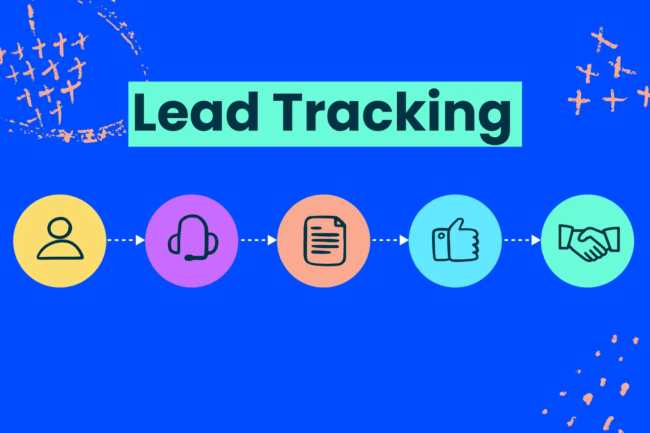
Sometimes the leads are happening, but tracking is broken or incomplete.
If the pixel, conversion event, or Conversions API isn’t set up correctly, Meta and Google can’t learn who converts, so they drift toward easier signals like clicks.
This gets especially messy in insurance when:
- calls happen offline,
- forms route through CRMs,
- multiple domains or subdomains exist,
- thank-you pages aren’t firing consistently.
If the system can’t see conversions, it will optimize for whatever it can see.
High CTR Can Actually Be a Warning Sign
Here’s a simple way to read performance:
If CTR is high and conversions are low…
You’re likely attracting the wrong kind of intent, or your landing experience is eroding trust.
If CTR is low and conversions are strong…
Your ad isn’t exciting, but your funnel is solid. You might simply need better creativity.
If both CTR and conversions are low…
You have a relevance problem. Offer, audience, and message aren’t aligned.
If both are high…
That’s the dream. Scale carefully and protect lead quality.
This is why we don’t treat CTR as a “success metric” at Flying Goat Agency. We treat it like a diagnostic.
What to Optimize Instead of CTR in Private Health Insurance Ads
If your goal is actual growth, these are the metrics that matter more:
- Landing page view to lead rate (not click to lead)
- Cost per qualified lead (not cost per click)
- Lead-to-call booked rate
- Call show rate
- Close rate by source
- Speed-to-lead (how fast you respond)
For B2B service businesses, the same logic applies. Clicks don’t pay salaries. Conversions do.
How Flying Goat Agency Fixes the CTR Trap
High CTR with low conversions is not a mystery. It’s a system problem, and systems are fixable.
When we step into these campaigns, we typically run a structured sequence:
- Intent clean-up
Tighten targeting and messaging so we attract decision-ready users, not browsers. - Message matching
Align ad promise, landing headline, and CTA so the user feels continuity, not confusion. This is consistently cited as a core driver of conversion. - Trust-first landing design
Especially in health insurance, remove uncertainty early. - Friction reduction
Shorten the path to action, particularly on mobile. - Tracking and feedback loop
Ensure platforms can learn from real conversions, not just clicks.
The result is a campaign that behaves like an acquisition engine, not a click generator.
Quick Self-Test: Are Your Ads Built for Clicks or Conversions?
Give yourself 1 point for each “yes”:
- My ad calls out who it’s for (not “everyone”).
- My landing page headline mirrors my ad headline.
- My form is short and easy on mobile.
- I clearly state what happens after the form.
- I have trust elements visible before the form.
- My conversion tracking is confirmed and consistent.
- I measure qualified leads, not just leads.
Score guide:
- 0–3: Your CTR might be misleading you.
- 4–5: You’re close, but leaking conversions post-click.
- 6–7: You’re positioned to scale without sacrificing quality.
Final Takeaway: CTR Is a Doorbell, Not a Sale
High CTR means people rang the doorbell. Conversions mean they came inside, felt comfortable, and took the next step.
In private health insurance, that step requires clarity, trust, and a frictionless path. If any part of that system is weak, CTR becomes an expensive distraction.
If you want your campaigns to bring in real conversations and qualified opportunities, not just clicks, Flying Goat Agency is built for that exact problem: turning attention into outcomes.