
Most health insurance lead programs don’t “fail” because the ads are bad or because people suddenly stopped needing coverage.
They fail because the first 30 days expose the cracks that were already there: weak follow-up, mismatched expectations, poor tracking, and a lead flow that was never designed to compound.
If you’ve ever said, “We tried leads for a month, and it didn’t work,” this is for you. Let’s break down what really happens in that first 30 days, why it goes sideways so often, and what a program built for long-term wins actually looks like.
The 30-Day Trap: What People Expect vs What Actually Happens

A lot of agents start a lead program with one mental model:
“I’ll pay for leads, leads will show up, I’ll close deals.”
But lead generation is not a vending machine. It’s a system. And most systems need a short ramp-up period before they stabilize.
Even on the advertising side, platforms go through a learning/optimization period that depends on conversion volume, conversion cycle length, and bidding strategy. If you judge performance too early, you often kill the campaign before it becomes efficient.
Now add the human side: health insurance isn’t an impulse buy. People hesitate. They compare. They need follow-up. And if your program doesn’t account for that reality, day 30 will feel like a failure.
Reason #1: Your Speed-to-Lead Is Too Slow (And Leads Cool Off Fast)

This is the silent killer.
Research from Harvard Business Review shows that companies responding within minutes are dramatically more likely to qualify and convert inbound leads compared to those that wait hours or days.
Most leads are most responsive right after they submit a form. If your team responds hours later, you’re not “following up,” you’re chasing ghosts.
Multiple studies and industry analyses consistently show big conversion lifts when you respond within minutes, not hours. For example, InsideSales highlights dramatically higher conversion rates when contact attempts happen within the first five minutes versus later windows.
Quick self-check:
- Are you contacting new leads in under 5 minutes?
- Or do they sit in a spreadsheet until “later today”?
If it’s the second one, the problem isn’t lead quality. It’s lead handling.
Reason #2: You’re Treating Leads Like One Conversation, Not a Sequence

A lead program fails after 30 days when your team assumes one call equals one outcome.
In reality, most prospects require multiple touches across channels. One widely cited benchmark is that it often takes 6–8 touches to move a lead from marketing-qualified to sales-qualified.
So when someone says, “These leads don’t answer,” what they usually mean is:
“We tried twice and stopped.”
Mini challenge: Pick one lead from last week that didn’t convert.
How many touches did they actually receive?
- 1–2 touches = you didn’t nurture
- 5–8 touches = you gave the process a fair shot
Reason #3: You Bought Volume, Not Fit

There are two ways lead programs get built:
- Max form fills (cheap leads, low intent, wide targeting)
- Max qualified conversations (higher intent, tighter targeting, better filters)
Most lead programs fail after 30 days because they start with option #1. It looks good on a dashboard (“Look, 300 leads!”), but it collapses under real sales effort because the leads aren’t aligned with your actual buyer.
Fit problems show up as:
- wrong age bands
- wrong geography
- wrong expectations (“I thought this was free”)
- not eligible or not ready
- not the right policy type
A real program builds the pipeline around who you can actually help and close, not who can click cheapest.
Reason #4: Your Tracking Is Too Weak to Improve Anything

If you can’t answer these questions, you can’t optimize:
- Which lead source converts best?
- What’s the cost per booked call (not cost per lead)?
- What’s the cost per issued policy?
- Where exactly are leads dropping off?
A lot of agents track only CPL (cost per lead). That’s like judging a restaurant by how cheap the menu looks, not whether the food is good.
If your program “fails” after 30 days, it’s often because you learned nothing in 30 days. No feedback loop = no improvement loop.
Reason #5: The Offer and Landing Page Don’t Match Buyer Psychology

Health insurance prospects don’t want “marketing.” They want clarity.
When a landing page is vague, overly clever, or too broad, you attract low-intent leads who are curious but not committed. When the message is clear and specific, you attract people who are actually shopping.
Common mismatch patterns:
- Ad promises “quotes,” landing page talks “benefits”
- Ad is specific (“family coverage”), form is generic (“tell us about you”)
- The call-to-action is unclear (quote? consultation? plan comparison?)
You don’t need a fancy funnel. You need a consistent message path from ad → page → form → first contact.
Reason #6: Your Program Doesn’t Respect the “Learning Phase”

If you run paid traffic, the first weeks are often about collecting enough signal to improve delivery.
Google Ads explicitly describes campaign learning as being influenced by conversion volume and the length of your conversion cycle. If your conversions take time, your optimization will take time.
Google Ads explains that campaigns require sufficient conversion data to move out of the learning phase, and premature changes can reset performance stability.
What happens in many lead programs:
- Week 1: early data is noisy
- Week 2: small changes get made randomly
- Week 3: someone panics and changes everything
- Week 4: “This doesn’t work”
That’s not strategy. That’s impulse.
A real program changes one major variable at a time, tracks downstream outcomes, and builds stability before scaling.
Reason #7: You Don’t Have a Real Nurture System (So Leads Leak)
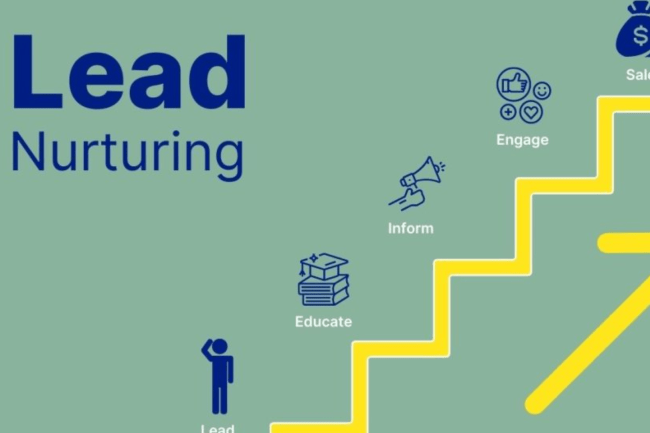
Even with strong speed-to-lead, many prospects won’t buy on day one.
So the question becomes: what happens after the first call?
If your follow-up is inconsistent, leads leak out of the pipeline. If your follow-up is structured, you turn “not now” into “next week.”
This is why modern lead programs run on systems:
- SMS + email touchpoints
- scheduled call attempts (with a plan)
- reminders, value messages, coverage explainers
- reactivation sequences for cold leads
Lead nurturing isn’t “extra.” It’s where most of the revenue is hiding.
Why FGA’s Approach Doesn’t Collapse at Day 30
At Flying Goat Agency, the goal isn’t “run ads.” It’s build a lead system that holds up under real sales pressure.
That means the program is designed around:
- speed-to-lead workflows (so leads don’t cool off)
- quality filters (so your agents talk to the right people)
- multi-touch nurturing (because one call is not a process)
- tracking that connects marketing to sales outcomes (not vanity metrics)
- structured optimization cycles (so performance improves instead of resetting every week)
It’s not magic. It’s execution and consistency.
And when a program is built correctly, day 30 isn’t the end. It’s the moment the system starts to become predictable.
Quick 30-Day “Failure” Audit: Score Yourself
Give yourself 1 point for each “Yes”:
- We respond to new leads in under 5 minutes.
- Every lead gets at least 6–8 touches across the first week.
- We track cost per booked call and cost per issued policy.
- We know our best-performing lead source and why.
- We change one variable at a time and let data collect.
- We have a nurture sequence running automatically.
- Our ads and landing page promise the same outcome.
Score guide:
- 0–2: the program didn’t fail, the system never existed
- 3–5: you’re close, but leaking value
- 6–7: now you can scale with confidence
The Real Fix: Stop Running “Lead Programs,” Start Running a Lead System
Most lead programs fail after 30 days because they were built for hope, not for reality.
Reality is:
- leads cool off fast
- buyers need multiple touches
- optimization needs time and clean data
- sales process matters as much as ads
If you want a lead engine that doesn’t burn out after a month, build it like a system from day one. That’s what FGA is built for.