
Insurance agents and B2B service providers ask this question constantly:
Should we invest more in Google Ads or Facebook Ads for health insurance leads?
In 2026, both platforms remain dominant in digital advertising. But they perform very differently depending on intent, timing, and funnel strategy.
Google Ads captures demand when people are actively searching for coverage, while Facebook Ads helps create demand among audiences who may not yet realize they need insurance.
The real question is not simply which platform performs better. The smarter question is: which platform performs better at different stages of the insurance buying journey?
Let’s break down how each platform works, where each shines, and how top-performing agencies combine them to generate consistent private health insurance leads.
Understanding the Core Difference: Intent vs Discovery
Before comparing performance, it’s important to understand the structural difference between these platforms.
Google Ads targets people actively searching for insurance solutions. When someone types “private health insurance plans near me” or “best family health insurance policy,” they already have intent. That means the user is closer to making a decision.
Facebook Ads, on the other hand, appear while users are browsing social content. They are not actively looking for insurance. Instead, ads introduce ideas, educate audiences, and spark curiosity.
Both platforms run pay-per-click advertising, but they reach audiences at different stages of the buyer journey: Google captures active searches, while Facebook introduces solutions earlier in the decision process.
Think of it this way:
- Google Ads = Demand capture
- Facebook Ads = Demand creation
Both are valuable, but they work at different moments in the buyer journey.
How Google Ads Generates Health Insurance Leads
Google Ads has long been the backbone of performance marketing for insurance agencies.
When someone searches for a specific insurance solution, their intent is already clear. This makes Google Ads particularly effective for high-intent leads and direct conversions.
Key Advantages of Google Ads for Insurance
- High purchase intent
Search ads target people actively seeking solutions. These prospects often convert faster because they already recognize their need.
- Strong conversion potential
Across industries, Google search campaigns average conversion rates around 7–7.5%, reflecting their ability to drive immediate action from motivated users.
- Keyword targeting precision
Agents can target exact phrases like:
- “PPO health insurance quotes”
- “self-employed health insurance plans”
- “private health insurance cost”
This allows precise alignment with user intent.
- Local targeting
Insurance agents can focus on licensed states or regions, reducing wasted spend and attracting geographically relevant leads.
Where Google Ads Can Fall Short
Despite its strengths, Google Ads isn’t perfect for every stage of the funnel.
Higher costs in competitive industries
Insurance is one of the most expensive PPC industries. High competition often drives up costs per click.
Limited reach among cold audiences
Search ads can only target people already searching. They cannot reach people who might need insurance but haven’t begun researching yet.
This is where Facebook Ads comes into play.
How Facebook Ads Generate Health Insurance Leads

Facebook (Meta) Ads excel at reaching people earlier in their decision journey.
Instead of waiting for someone to search, advertisers can target users based on:
- demographics
- behaviors
- life events
- interests
For example, insurance campaigns can target audiences such as:
- new parents
- freelancers
- self-employed professionals
- homeowners
- small business owners
These groups are statistically more likely to need coverage soon.
Key Advantages of Facebook Ads
- Advanced audience targeting
Facebook allows highly detailed audience segmentation based on interests and behavior.
- Lower cost per click
Paid social campaigns typically have lower entry costs compared with search advertising.
- Visual storytelling
Video ads, carousel ads, and short-form content allow agents to explain complex insurance products in an approachable way.
- Lead generation forms
Facebook’s native lead forms reduce friction by allowing users to submit information without leaving the platform.
The Quality vs Volume Debate
One of the biggest debates between Google Ads and Facebook Ads centers on lead quality vs. lead volume.
Google Ads usually generates fewer but higher-intent leads, because users are actively searching for solutions.
Facebook Ads typically produce higher lead volume at lower cost, but those leads often require nurturing before they convert.
This difference is not necessarily a disadvantage. It simply reflects different stages of the marketing funnel.
For example:
| Platform | Typical Role | Lead Type |
| Google Ads | Capture active demand | High-intent leads |
| Facebook Ads | Create demand | Early-stage prospects |
Understanding this distinction helps agencies allocate budgets more effectively.
Conversion Rates and Performance Benchmarks
Benchmark data across paid advertising campaigns provides useful insights into platform performance.
Across industries:
- Google Search Ads typically have conversion rates of 7–7.5%.
- Facebook lead generation campaigns often average around 8–9% conversion rates, though intent levels differ.
However, these numbers don’t tell the full story.
A Facebook lead might require multiple follow-ups before converting into a client, while a Google lead may convert quickly due to higher intent.
That means evaluating platforms solely by conversion rate can be misleading. Lead quality and sales cycle length matter just as much as cost per lead.
When Google Ads Performs Better for Insurance Leads
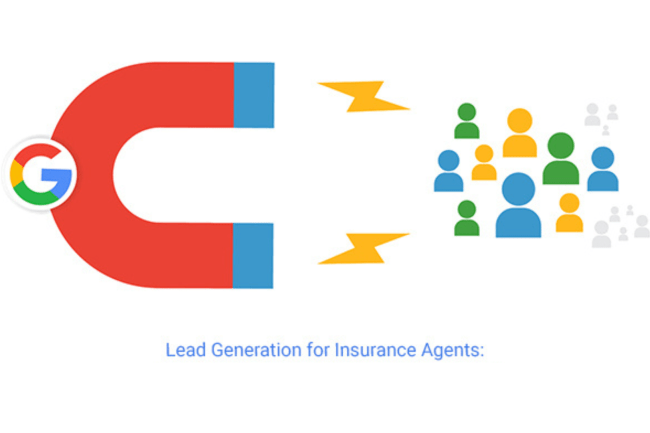
Google Ads often outperforms Facebook Ads when:
- prospects already know they need insurance
- the search query signals urgency
- the goal is immediate policy inquiries
- campaigns target specific keywords and locations
For example, someone searching for “best private health insurance for freelancers” is likely ready to compare plans immediately.
In situations like this, Google Ads is usually the fastest path to revenue.
When Facebook Ads Perform Better
Facebook Ads shine when the goal is education, awareness, and pipeline building.
They work well when:
- Audiences are unaware they need insurance
- The product requires explanation
- Agents want to build brand recognition
- Remarketing campaigns are used
For example, an educational video explaining “how private health insurance works for self-employed professionals” can generate strong engagement on Facebook and start conversations that later convert.
Why the Best Agencies Use Both Platforms

The most effective insurance marketing strategies rarely rely on just one platform.
Instead, they build a full-funnel approach that combines both.
A typical strategy might look like this:
Step 1: Facebook Ads introduce the concept of private health insurance to targeted audiences.
Step 2: Educational content and retargeting ads build familiarity and trust.
Step 3: When prospects begin actively searching, Google Ads captures that demand.
This approach aligns perfectly with how modern consumers make decisions.
Research consistently shows that Google captures demand while Facebook creates it, making them complementary rather than competing channels.
What the Best Health Insurance Campaigns Do Differently
High-performing agencies focus on more than just platform choice.
They optimize the entire funnel:
- strong landing pages
- fast lead response time
- clear qualification processes
- consistent follow-up
- CRM integration and tracking
Without these elements, even the best ad platforms will struggle to produce consistent results.
In other words, platform selection matters, but strategy matters more.
The 2026 Verdict: Which Platform Wins?
If we had to summarize the debate in one sentence:
Google Ads wins for immediate conversions, while Facebook Ads wins for scalable demand generation.
The most successful insurance agencies don’t treat this as a competition. They treat it as a system.
Facebook builds awareness and fills the pipeline.
Google captures ready-to-buy prospects.
Together, they create predictable growth.
Final Thoughts
The debate between Google Ads and Facebook Ads often misses the bigger picture. Both platforms are powerful tools for generating health insurance leads, but they serve different purposes within the customer journey.
For insurance agents and B2B service providers aiming to scale in 2026, the real advantage lies in using both platforms strategically.
At Flying Goat Agency, we focus on building full-funnel advertising systems that combine intent-driven search campaigns with demand-generation social campaigns. The result isn’t just more leads, it’s better leads, faster conversions, and sustainable growth.
When the right strategy connects the right platform to the right audience at the right time, digital advertising stops being guesswork and starts becoming a reliable engine for growth.